Automate the Voyage. Never Automate the Homecoming.
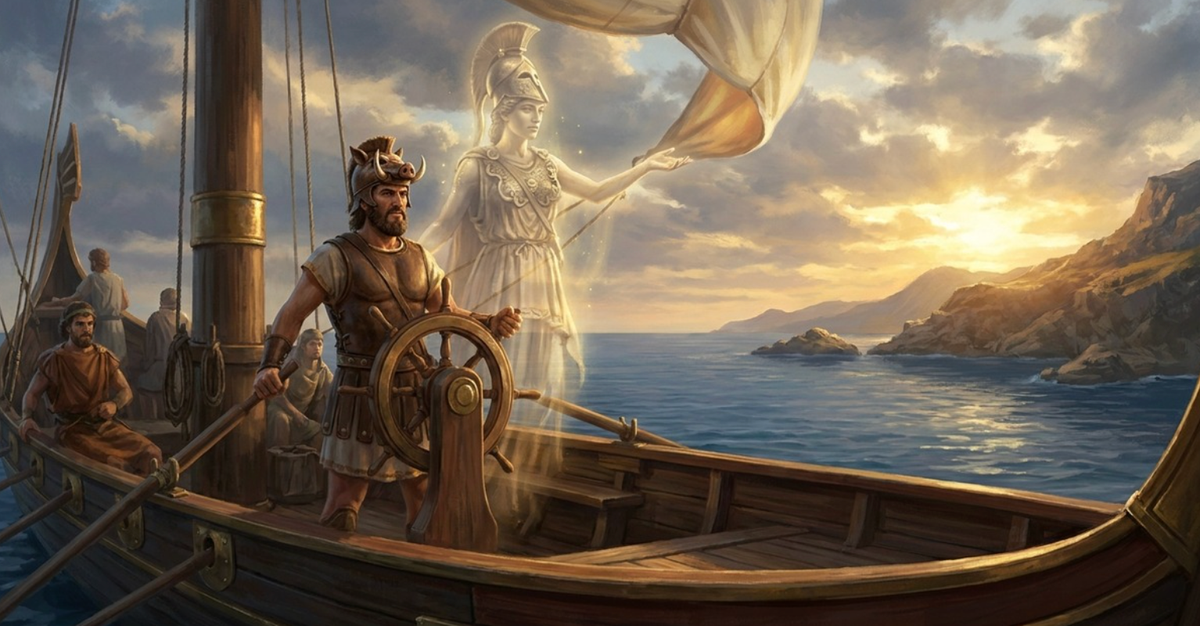
Adapted from my keynote at SMPS Amplify A|E|C, Las Vegas 2026.
My phone rang in the middle of writing this.
It was John from DOT District 4. They got funding for one of the projects we'd been hoping would clear, and he wants to sit down with me and one of my senior engineers next week.
My firm is not the cheapest. We don't always have the slickest proposals. But we've worked together on a couple of FDOT projects over the last few years, and he trusts us.
That phone call is the single most valuable asset in AEC business development, and no software on earth can generate one. Which is exactly what I want to talk about — because while everyone is panicking about what AI is taking, almost nobody is talking about what it just handed back to us.
The sea is not the sea we trained on
Three numbers explain the last two years better than any conference panel I've sat through.
Seventy to eighty percent of the buying decision is made before a firm is ever contacted. The part where minds actually get made up now happens without us in the room.
Roughly eighty-nine percent of B2B buyers now use generative AI as a primary research tool. Your next client isn't starting on your website. They're in a chat window, asking a machine which firms are best for a project like theirs and what they should watch out for.
About two and a half. That's the average shortlist now, down from three or four — and the overwhelming majority of deals are won from the day-one list.
Put those together, and you get the thing that should be keeping you up at night: there is now an invisible round of your pursuit that happens before the pursuit. And you are not invited to it.
The RFP is the harbor
We used to call this "top of the funnel." Too gentle. I call it Day Zero — the day the decision starts forming, long before Day One, when the RFP drops.
Here's the way I've come to think about it. In The Odyssey, by the time Odysseus finally sails into the harbor at Ithaca, the outcome is already decided. The suitors are already in his house. His wife has already made up her mind about who she's waiting for. The arrival isn't where the story is won. It's won out on the water, over years, out of sight.
That's the RFP. The RFP is the harbor.
For twenty years, we optimized the entire AEC playbook for the harbor — the proposal, the shortlist interview, the follow-up. We got very good at the visible game. But the visible game is now the back half of the decision. We've been perfecting our performance for the second act of a play whose ending was written in the first.
When everyone has the same tools, everyone is a suitor
Homer counts 108 suitors in Penelope's house. They wear the same finery. They make the same speech. They feast on the same food and swear they're the best match. They are, functionally, interchangeable.
That is your proposal shortlist in the age of AI.
When every firm can generate the same competent content, the same polished qualifications, the same slick first draft in an afternoon, everyone in the hall starts to look the same. So let's name the fear directly, because I feel it too: if the machine does the research, and the buyer self-serves, and the shortlist is set before we show up, and everyone's proposal looks identical — what is actually left for us to do?
The answer is genuinely good news.
The one question a machine can't answer
AI is spectacular at the things that were never our differentiator. It can summarize your qualifications. It can compare your project list to a competitor's. It can draft ninety percent of the boilerplate.
But there is one question no machine can answer for a client, and it happens to be the only question that ever really mattered:
Can I trust these people when the project goes sideways at 2 a.m.?
Every building, every bridge, every pursuit worth having eventually goes sideways. Clients never bought your qualifications — they never did. They buy a bet on how you'll behave when the budget's blown, the schedule's on fire, and nobody has a clean answer. No language model can vouch for that.
The machine didn't erase our advantage. It erased everything that was hiding it.
| What AI commoditized | What it can't touch |
|---|---|
| Research and summaries | Trust |
| Firm-to-firm comparisons | Judgment under pressure |
| First-draft proposals | Your reputation when you're not in the room |
| Qualification matching | The Day Zero relationship |
| Scheduling and mechanics | Your name, with a story attached |
Hear the song. Don't let it steer.
Odysseus has to sail past the Sirens, whose song is beautiful enough that every sailor who hears it turns the ship toward the rocks. His move isn't to plug his own ears. He wants to hear it. So he has the crew tie him to the mast, plug their own ears, and row.
AI is the Sirens' song, and it is genuinely beautiful. Faster proposals, instant research, content at infinite scale. The firms wrecking themselves right now are the ones who turned the whole ship toward it — who decided the machine could be the relationship. Automate the outreach, automate the follow-up, automate the human out of the work, and wake up as suitor number one hundred and nine.
Don't plug your ears. Tie yourself to the mast. And the mast — the thing that lets you harness something powerful without being wrecked by it — the mast is your process.
I'll quote a book I know well, because I co-wrote it. The first thing we say in CRM or Die is that CRM is not about a piece of technology. It is about process and people.
Everyone in our industry is about to be sold the ship: a better platform, a smarter AI layer, a shinier dashboard. But the ship was never the voyage. Odysseus doesn't get home because he has the best boat — he loses the boat more than once. He gets home because of the crew and the navigation. People and process.
And here's the number that should stop any firm from buying the ship and skipping the crew: in engineering and construction, 95.5% of the data we capture goes completely unused. We are hoarding treasure in the hold and sailing in circles.
Take the gifts. Refuse the island.
There's a moment people forget. For seven years, Calypso holds Odysseus on her island and offers him the ultimate deal — stay, and I'll make you immortal. No aging. No struggle. No risk. A perfect, frictionless, endless existence.
He says no. He goes down to the shore and weeps at the sea, because he'd rather go home to a mortal, aging, imperfect wife and a messy human life than live forever in flawless comfort.
That's the deal AI is quietly offering all of us. Frictionless. Effortless. Polished forever, and you never have to make the hard call or the awkward phone call again. It's a real temptation. And the firms that win the next decade will do exactly what Odysseus did: take the gifts and refuse the island.
A client can tell the difference between a firm that showed up perfect and a firm that showed up human.
Athena clears the path. Odysseus still has to walk it.
Athena is the most powerful ally in the story. She fogs the harbor so he can move unseen. She disguises him. She puts the right words in his mouth. She tips the odds at every turn.
But notice what she never does. She never sails the ship for him. She never walks into the hall in his place. She never gets recognized at the door as him.
The god amplifies. The human still has to make the journey and be known.
That's the whole strategy in one line: automate the tedious to fund the relationship. Let the machine write the first draft so your seller-doer can have the coffee. Let it run the research so your PM can make the site visit that wasn't in scope. Everyone will have the same AI by this time next year. The winners will be the ones who spend the time it buys back on being human.
Four moves for Monday
1. Get into the Day Zero conversation. Stop measuring engagement only from the RFP forward. Put real thought leadership out with your experts' actual names on it, and nurture your past clients like they're your sales team — because in the age of AI-mediated research, your alumni network of happy clients is your algorithm. When the machine gets asked who's good, it answers with what your old clients wrote about you.
2. Automate the transaction, protect the relationship. Audit your BD week. Hand the formatting, the chasing, and the CRM admin to the machine. Then make an ironclad rule that the saved hours are reinvested in client face time, not more admin. That's CRM or Die in one sentence: the system does the process ,so the people can do the relationship.
3. Make your firm legible to the machines. If nine in ten buyers start with AI, your expertise has to be findable and citable. Clear, substantive, attributable content. Be the firm the answer engine recommends — not the firm whose brochure copy is locked in a PDF nobody can read.
4. Double down, out loud, on being human. The handwritten note. The honest phone call instead of the hedged email. Remembering that the client's kid is applying to college. These aren't soft skills. In 2026, they are the hardest moat you have, precisely because they don't scale and a machine can't fake them.
Send Telemachus out
One more, because AEC actually figured this out decades ago and then half-forgot it.
We send the engineer who will do the work — the seller-doer — instead of a polished proxy. About 89% of AEC firms operate this way, and 70% do so because clients prefer dealing with the person doing the work. Clients respond to the expert who has opinions and a point of view, not the rehearsed pitch.
Here's the tension: only about a third of firms give their seller-doers any formal training, and a lot of the training that does happen quietly coaches the personality back out. We take authentic technical people and polish them into suitors.
In the story, Telemachus has to leave home and make his own voyage before he's someone worth recognizing. So send your Telemachus out. Train the judgment, the storytelling, the courage to hold an opinion. Don't train them to put the suit back on.
A machine cannot manufacture a scar
When Odysseus finally makes it home after twenty years, nobody knows him. He's aged, disguised, a stranger at his own door. And how is he finally recognized? Not by his résumé. Not by a portfolio. His old nurse washes his feet and feels a scar she's known since he was a boy. His ancient dog lifts its head. His wife tests him with a secret only the two of them share.
He's recognized by shared history. By the story attached to his name.
I know a principal who lost a pursuit he was certain he'd win. The client never said the other firm was more qualified. He said they weren't in the conversation before the conversation.
So he changed how his firm showed up. He had his people call every past client they'd lost touch with — not to sell, just to reconnect. He put his engineers' real opinions out under their own names. He automated the proposal grind so his team could get out from behind their desks.
Eleven months later, that firm won the largest pursuit in its history. Asked why, the client said: "You were the only firm that felt like people, not a package."
That's the scar. That's being recognized at the door.
The bottom line
This was never human versus machine. It's Odysseus and Athena — human, amplified by machine.
Let the technology get very, very good at everything that made our work feel transactional. Good. Let it. That's exactly what frees us to be great at the thing that made it a relationship.
Take every gift the technology offers, and refuse the island. Tie yourself to the mast of your process. Send your people out to be recognized at the door.
Automate the voyage. Never automate the homecoming.
In a world where a machine can do almost everything, the most valuable thing you can be is unmistakably, generously, courageously human. That isn't the threat of this new era. That's the invitation.
If your firm is trying to figure out where the automation should stop and the relationship should start, that's most of what I do all day. Let's find fifteen minutes and talk it through.
Sources: Forrester 2025 B2B Buying Study (70–80% of the decision made before contact) and Buyers' Journey Survey 2024 (~89% of buyers using generative AI); Apollo 2026 and 6sense 2025 (shortlist shrinking from ~3.2 to ~2.5 firms); FMI 2018, via CRM or Die by Courtney Kearney, CPSM and Chaz Ross-Munro (95.5% of E&C data unused); Scott D. Butcher, FSMPS, CPSM — Stambaugh Ness and the SMPS Foundation, AEC.BD (seller-doer statistics). Epic elements drawn from Homer's Odyssey, with a nod to Christopher Nolan's 2026 film.